
Introduction
You slept 8 hours last night. You had your morning coffee. You did everything right — yet by 10 AM, you are already dragging yourself through the day.
Sound familiar?
If you constantly ask yourself “why do I feel tired all the time?” — you are not alone. Millions of people suffer from chronic, unexplained fatigue every single day. And the scary part? Most of them never find out why.
The answer is almost never “you just need more sleep.”
Constant tiredness is your body sending you an SOS signal. Something deeper is going on — and in this post, we break down the 7 most common (and most ignored) hidden causes of feeling exhausted all the time, plus what you can actually do about each one.

What Is Chronic Fatigue — And When Should You Worry?
Feeling tired after a late night is normal. But chronic fatigue is different — it is a persistent, heavy exhaustion that does not go away even after rest, and it interferes with your daily life.
You should pay attention if you:
- Feel tired every single day for more than 2 weeks
- Wake up unrefreshed no matter how long you sleep
- Have zero motivation or brain fog throughout the day
- Feel physically weak even without doing anything strenuous
This kind of fatigue is always a sign that something in your body needs attention. Let’s look at the most common hidden culprits.
7 Hidden Causes of Feeling Tired All the Time
1. Iron Deficiency (Even Without Full Anemia)
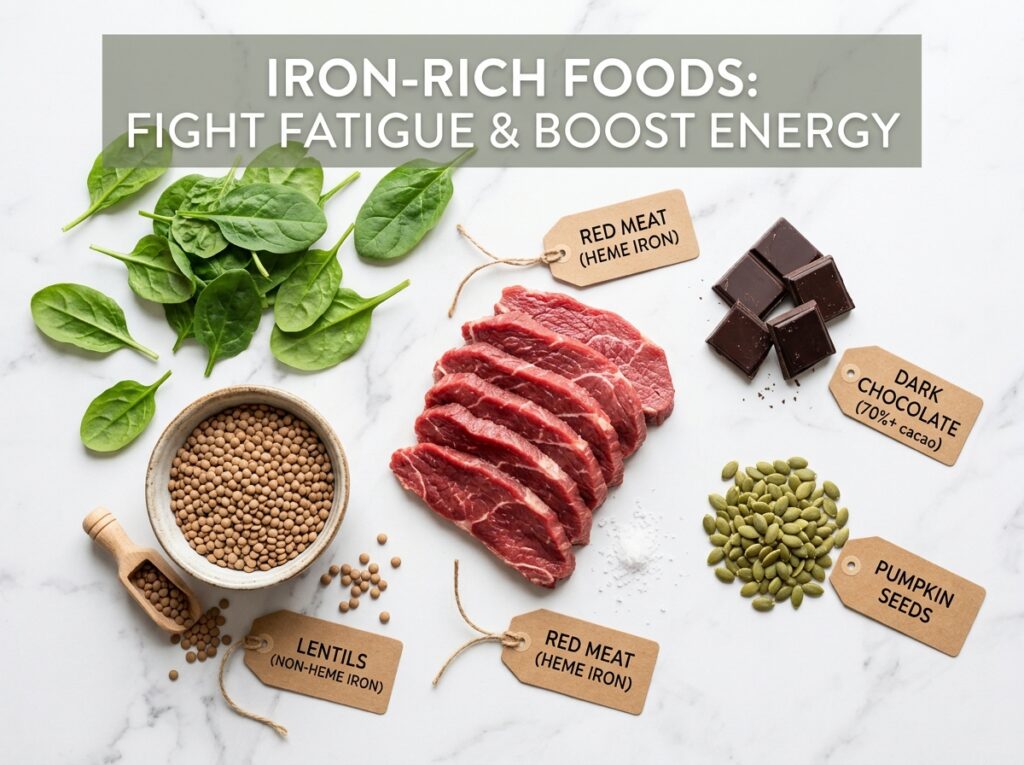
Iron is what your red blood cells use to carry oxygen around your body. When iron is low — even slightly, before it becomes full anemia — your cells are not getting enough oxygen. The result? Constant exhaustion, weakness, and that heavy, foggy feeling.
This is especially common in:
- Women of childbearing age
- People who follow a vegetarian or vegan diet
- Those who exercise heavily
What to do: Ask your doctor for a ferritin blood test (not just a standard hemoglobin test — ferritin is more sensitive). Eat more iron-rich foods like lentils, red meat, spinach, and pumpkin seeds. Pair them with vitamin C for better absorption.
2. Poor Sleep Quality (Not Just Sleep Quantity)
Here is something most people do not realize: it is not how many hours you sleep — it is how well you sleep.
If you are waking up multiple times at night, sleeping with your phone nearby, or going to bed after midnight every day, your body never fully enters deep restorative sleep. You spend 8 hours in bed but zero hours actually recovering.
Common sleep quality killers:
- Blue light from screens before bed
- Eating heavy meals within 2 hours of sleeping
- Undiagnosed sleep apnea (you stop breathing briefly during sleep)
- Room temperature that is too warm (ideal is 18–20°C)
What to do: Try a 7-day screen curfew — no phone 45 minutes before bed. If you snore heavily or your partner notices you stop breathing, get checked for sleep apnea. It is more common than you think, and extremely treatable.
3. Vitamin D Deficiency
Vitamin D is not just a bone vitamin. It plays a direct role in energy production, mood regulation, and immune function. When your Vitamin D levels are low, one of the first symptoms is persistent, unexplained fatigue.
The problem? Most people are deficient and have no idea. You cannot feel it building — until the exhaustion becomes impossible to ignore.
Who is most at risk:
- People who spend most of their time indoors
- Those living in countries with limited sunlight (including Pakistan’s winter months)
- People with darker skin tones (melanin reduces Vitamin D synthesis)
What to do: Get a simple 25-OH Vitamin D blood test. Spend 15–20 minutes in direct morning sunlight daily. Ask your doctor about supplementation — most people need 1,000–2,000 IU per day.

4. Dehydration (Even Mild Dehydration Drains You)
Most people only drink water when they feel thirsty. But by the time you feel thirst, you are already 1–2% dehydrated — and studies show even this mild level of dehydration reduces energy levels, focus, and physical performance significantly.
Your blood becomes slightly thicker when you are dehydrated, which means your heart has to work harder to pump it. Your brain — which is 75% water — starts to slow down. The result feels exactly like fatigue.
Signs you might be dehydrated:
- Urine is dark yellow
- Dry lips or mouth in the morning
- Headaches in the afternoon
- Difficulty concentrating
What to do: Aim for 8–10 glasses of water per day. Start your morning with a full glass of water before coffee — your body is always mildly dehydrated after sleeping.
5. Thyroid Dysfunction (Especially Hypothyroidism)
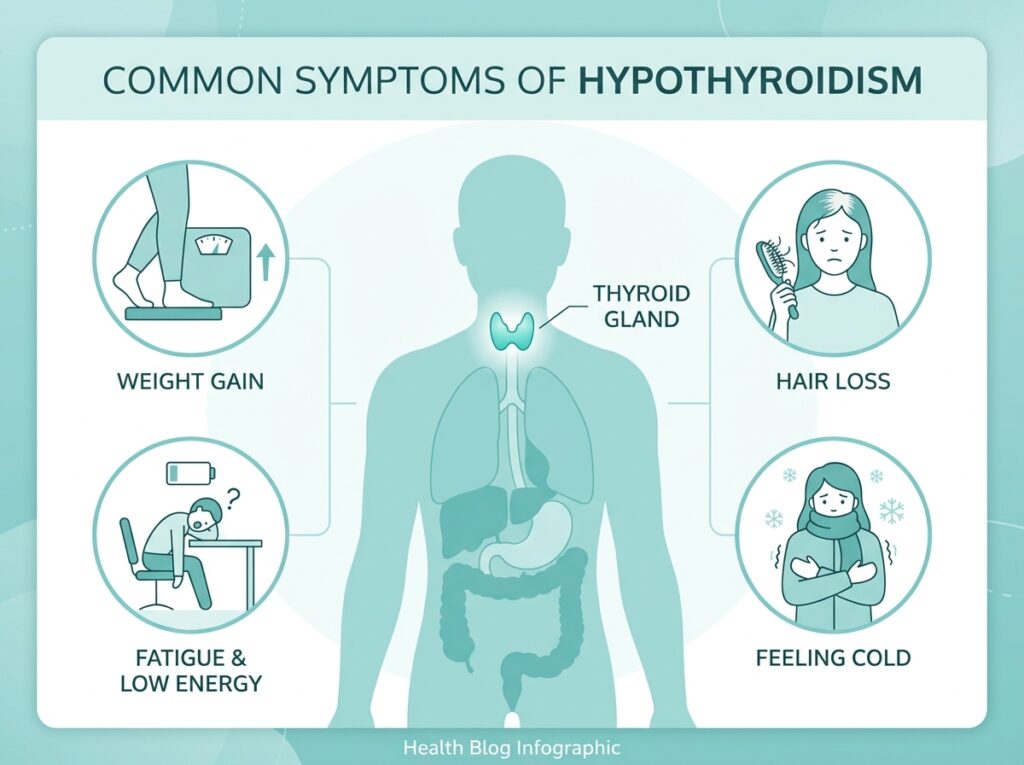
Your thyroid is a small gland in your neck, but it controls the speed of almost every process in your body — including your metabolism and energy levels. When it is underactive (hypothyroidism), everything slows down. You feel heavy, cold, foggy, and exhausted constantly.
Hypothyroidism is one of the most underdiagnosed conditions, especially in women.
Other symptoms of hypothyroidism:
- Unexpected weight gain
- Hair thinning or hair loss
- Feeling cold all the time
- Constipation
- Low mood or depression
What to do: Ask your doctor for a TSH blood test. This is a simple, inexpensive test that checks your thyroid function. Hypothyroidism is very manageable once diagnosed.
6. High Stress and Cortisol Imbalance
Chronic stress does not just make you feel mentally drained — it physically exhausts your body. When you are under long-term stress, your body continuously pumps out cortisol (the stress hormone). Over time, this drains your adrenal glands and leaves you in a state of constant low energy.
This is sometimes called adrenal fatigue, and it is extremely common in people with high-pressure jobs, family responsibilities, or financial stress.
Signs stress is making you tired:
- You feel wired at night but exhausted during the day
- You crash hard in the afternoon (2–4 PM energy dip)
- You feel emotionally numb or detached
- Small tasks feel overwhelming
What to do: Incorporate 10 minutes of deep breathing or meditation daily. Even basic stress management like a short walk, journaling, or talking to someone you trust can significantly reduce cortisol levels over time.
7. Poor Diet and Blood Sugar Crashes
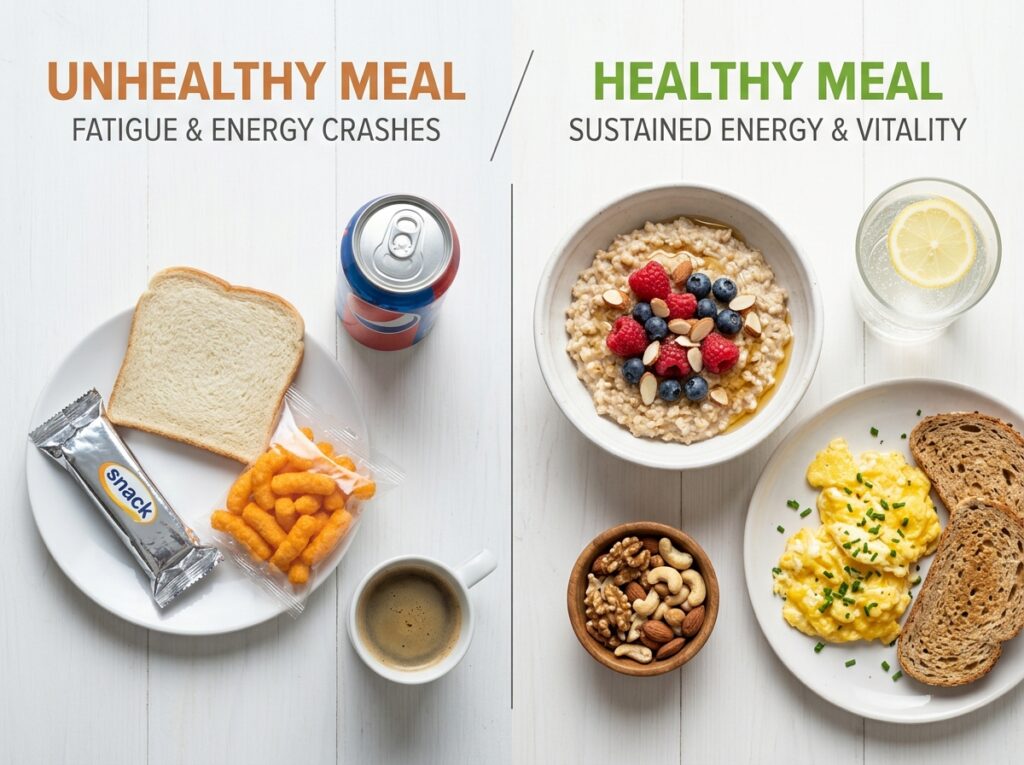
What you eat — and when you eat — has a massive impact on your energy levels throughout the day. A diet high in refined carbs and sugar causes sharp spikes in blood sugar, followed by dramatic crashes. Those crashes are what make you feel suddenly exhausted, irritable, and unable to focus.
If you feel fine in the morning but completely drained by midday, your diet is a very likely culprit.
Energy-draining eating habits:
- Skipping breakfast
- Eating processed snacks and sugary drinks
- Long gaps between meals
- Drinking too much caffeine (which masks fatigue, then worsens it)
What to do: Eat balanced meals with protein, healthy fat, and complex carbs every 3–4 hours. Swap white bread and sugary snacks for eggs, nuts, oats, and fruits. Reduce your coffee to 1–2 cups before noon.
Quick Summary: 7 Causes of Constant Fatigue
| Cause | Key Sign | Quick Fix |
|---|---|---|
| Iron deficiency | Weakness + pale skin | Test ferritin, eat iron-rich foods |
| Poor sleep quality | Unrefreshed mornings | Screen curfew, fix sleep environment |
| Vitamin D deficiency | Fatigue + low mood | Morning sunlight + supplement |
| Dehydration | Dark urine, headaches | 8–10 glasses water daily |
| Thyroid dysfunction | Weight gain + cold | TSH blood test |
| High cortisol/stress | Wired at night, crash in day | Breathing, walks, journaling |
| Poor diet/blood sugar | Midday energy crash | Balanced meals every 3–4 hrs |
⭐When to See a Doctor
While many causes of fatigue can be improved with lifestyle changes, you should see a doctor if:
- Fatigue has lasted more than 3–4 weeks with no improvement
- You have unexplained weight loss or gain
- You feel pain, shortness of breath, or heart palpitations
- Fatigue is affecting your ability to work or function
A simple panel of blood tests (iron, Vitamin D, thyroid, blood sugar, and CBC) can identify most of these issues within days.

Final Thoughts
Feeling tired all the time is not something you should just “push through.” Your body is communicating with you — and the sooner you listen, the faster you can feel like yourself again.
Start simple: drink more water today, get a blood test this week, and audit your sleep quality tonight. Small changes compound fast.
You deserve to have energy. Let’s make that happen.
Frequently Asked Questions (FAQ)
Q1: Why do I feel tired all the time even when I get enough sleep?
Sleep quantity is not the same as sleep quality. Poor sleep quality, iron deficiency, dehydration, or thyroid issues can all cause fatigue even after a full night’s rest. Getting a blood test is the best first step.
Q2: Can anxiety and stress make you feel physically tired?
Yes. Chronic stress keeps your body in a constant state of alert, pumping out cortisol around the clock. Over time this physically drains your body and causes persistent exhaustion, even without any physical exertion.
Q3: What vitamin deficiency causes tiredness and fatigue?
Iron (ferritin), Vitamin D, and Vitamin B12 are the three most common deficiencies linked to constant fatigue. All three can be detected with a simple blood test.
Q4: Is feeling tired all the time a sign of depression?
It can be. Fatigue is one of the most common symptoms of depression. However, it can also be caused by physical factors like thyroid issues or iron deficiency. A doctor can help rule out physical causes first.
Q5: How long does it take to recover from fatigue?
It depends on the cause. Iron and Vitamin D deficiencies typically improve within 4–8 weeks of treatment. Lifestyle-related fatigue (poor sleep, diet, stress) can improve within 1–2 weeks of consistent changes.